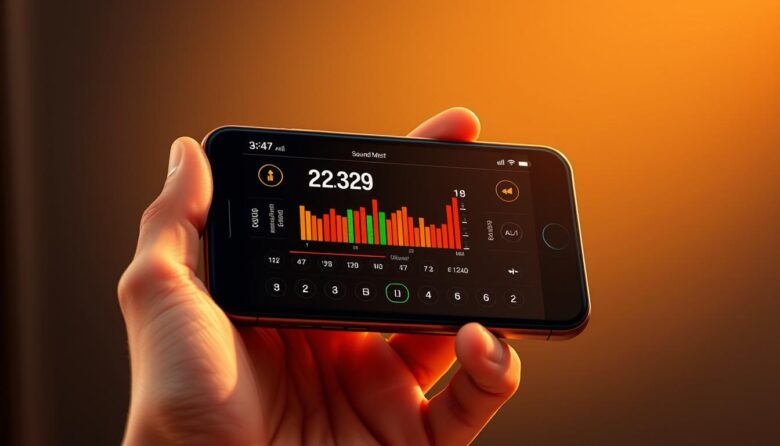
Your smartphone holds more power than you might realize. It can transform into a sophisticated tool for monitoring your acoustic surroundings. This capability makes detailed environmental assessment accessible to everyone.
Modern devices come equipped with highly sensitive microphones. These components capture audio data with impressive precision. Advanced processors then analyze this information to deliver accurate readings.
This technology empowers you to check your environment spontaneously. You can ensure compliance with local ordinances or verify the output of household appliances. Having this tool in your pocket offers incredible convenience without extra gear.
There is growing concern about the impact of constant auditory stimulation on well-being. Prolonged exposure to high volumes can lead to stress and sleep issues. Accessible measurement tools put control back into your hands.
Using an application is also a cost-effective solution. It eliminates the need for expensive dedicated hardware. This guide will show you how to select, set up, and use these applications effectively for various tasks.
Introduction: Transforming Your Phone into a Sound Meter
The built-in microphone in your mobile device is a powerful sensor waiting to be utilized. It can become a professional-grade sound level meter with the right application. This transformation provides immediate access to precise acoustic data.
Purpose and Benefits for DIY Projects
This capability is invaluable for personal improvement tasks. You can test the effectiveness of acoustic treatments or optimize a room for media enjoyment. Monitoring loud activities during renovations is another practical use.
Understanding your acoustic surroundings helps create a more comfortable living space. Regular checks allow for informed decisions, like adding rugs or seals to dampen disturbances.
Overview of Noise Analysis in Home Settings
Knowing typical volume benchmarks is crucial. A normal conversation registers near 60 dB. A peaceful sleeping area should be below 30 dB.
Maintaining appropriate noise levels offers significant wellness advantages. It can lead to reduced stress and improved sleep quality. This application turns abstract pressure into actionable measurements for a healthier environment.
Understanding the Basics of Sound Measurement
The science of acoustic assessment relies on several key technical components that work together to produce meaningful data. These elements form the foundation for accurate environmental monitoring.
The Role of Decibels and Microphones
Decibels (dB) serve as the universal unit for quantifying acoustic intensity. This logarithmic scale mirrors human perception of loudness, making it ideal for practical applications.
Microphones act as the primary sensors in any measurement system. They detect pressure variations in the air and convert them into electrical signals.
A preamplifier then strengthens these weak signals. This crucial step ensures accurate readings across various intensity ranges.
Time and Frequency Weighting Explained
Frequency weighting adjusts measurements to match human hearing sensitivity. The A-weighting filter (dBA) emphasizes mid-range frequencies while reducing extreme highs and lows.
Time weighting options include “fast” and “slow” response settings. Fast capture tracks sudden changes, while slow provides stable averaged readings.
These standardized filters follow international guidelines. They ensure consistency across different devices and applications.
Understanding these concepts helps you select appropriate settings for various scenarios. The system mimics human ear response, delivering objective acoustic data.
Mastering “sound meter, noise analysis, home DIY” Techniques
Achieving professional-grade results with your acoustic tool requires meticulous technique. Proper methodology ensures your data is reliable and reproducible for any situation.
This approach transforms simple readings into a powerful form of environmental assessment.
Essential Concepts for Accurate Measurements
Consistency is the foundation of trustworthy measurements. Always document the specific conditions under which you capture readings.
Record the type of device used and the number of samples taken. Note the precise location and duration of each session.
For outdoor assessment, weather conditions like wind speed and temperature can significantly influence results. Identifying all active sources is also critical, as multiple sources combine to affect the overall reading.
Taking multiple readings from different spots within a space provides a comprehensive understanding. This technique accounts for natural variations in the environment.
Common Standards and Regulations
Public authorities establish specific regulations to manage acoustic levels. These standards differ for industrial, construction, and residential areas.
Limits are typically stricter during nighttime hours to protect rest. Daytime regulations are often more lenient, reflecting higher ambient activity.
Understanding these official standards is vital for compliance verification and resolving disputes. Your documented measurements provide the objective data needed for informed decisions.
Selecting the Right Tools and Apps
The choice between dedicated hardware and mobile applications depends on your specific measurement requirements. Understanding equipment classifications helps identify appropriate tools for different scenarios.
Choosing a Reliable Sound Meter App
Mobile applications offer a cost-effective alternative to traditional equipment. Quality apps like Decibel Pro provide comprehensive features at accessible pricing.
These tools include noise dosimeter functionality for tracking cumulative exposure. Spectrum analysis enables frequency-specific measurements across various environments.
Professional applications incorporate industry standards like OSHA and NIOSH exposure limits. This allows users to assess whether their acoustic environment exceeds safe thresholds.
Comparing Hardware Options and Smartphone Capabilities
Professional equipment follows standardized classification systems. Type 1 devices deliver precision-grade assessments for laboratory testing.
Type 2 meters suit general-purpose measurements in residential and commercial settings. These class sound level instruments provide sufficient accuracy for most personal projects.
Dedicated hardware ranges from $150 to $4000 depending on classification. Mobile applications offer significant savings while maintaining professional functionality.
Evaluating app reliability involves checking calibration certifications and user reviews. Ensure the application uses appropriate weighting standards for accurate readings.
Setting Up Your Phone for Accurate Noise Measurements
The accuracy of your environmental monitoring depends heavily on initial configuration. Proper preparation ensures your data reflects true conditions rather than measurement artifacts.
Optimizing Microphone Placement
Position your device 1.3 to 1.5 meters above the ground. This height standardizes measurements at typical ear level.
Hold the unit at arm’s length with the microphone facing the source. This prevents your body from reflecting waves that distort readings.
Clear obstacles between the microphone and source indoors. Reflective surfaces can artificially inflate your measurements.
Adjusting Settings for Real-Time Analysis
Select A-weighting for general environmental assessment. This setting mimics human hearing sensitivity.
Choose fast response for sudden changes or slow for stable averages. The display shows fluctuations in real-time.
Take multiple readings from different locations. This accounts for variations in acoustic distribution.
For outdoor use, document weather conditions and avoid wind exceeding 5 m/s. Dry conditions provide the most reliable data.
Troubleshooting and Calibration Tips
Even the most sophisticated acoustic tools require periodic verification to maintain their precision. Regular calibration ensures your device provides consistent, reliable data across different environments and time periods.
Begin by verifying your device against known reference sources. Compare readings with professional-grade equipment or standardized calibration tones. This process confirms your tool’s accuracy before important assessments.
Resolving Common Setup Issues
Inconsistent readings often stem from simple physical obstructions. Check that phone cases or screen protectors don’t cover microphone openings. These barriers can significantly muffle input and distort results.
Environmental contamination presents another frequent challenge. Identify and minimize background sources before taking measurements. Close windows and temporarily disable HVAC systems during critical assessments.
Understanding your display helps interpret fluctuating data correctly. Recognize the difference between peak and average readings. Adjust time weighting settings based on whether you need instant responses or stable averages.
For custom-built devices, calibration involves mathematical conversion. The formula decibels = 20 * log10(amplitude / 1) transforms raw sensor data into standard units. Proper electrical connections ensure consistent performance.
Wrapping Up: Next Steps for Your Sound Measurement Journey
The transition from learning about decibel monitoring to implementing real-world solutions represents the final phase of your acoustic education. You now possess the knowledge to transform your mobile device into a professional-grade tool for environmental assessment.
Begin by establishing baseline readings throughout your living spaces. Document typical acoustic levels during different times to create reference points. This systematic approach helps identify patterns and problematic periods.
Consider projects like testing appliance performance or evaluating community acoustic environments. Workplace monitoring ensures personal safety, while residential tracking supports wellness goals. Advanced app features provide deeper insights into frequency-specific issues.
Regular acoustic management offers significant health advantages, including stress reduction and improved sleep quality. You now have the power to create healthier living and working environments through informed decisions based on objective data.